Fiat-to-Crypto Payment Gateway: How Card Payments Become USDC
By Qist Engineering · Published 2 mai 2026

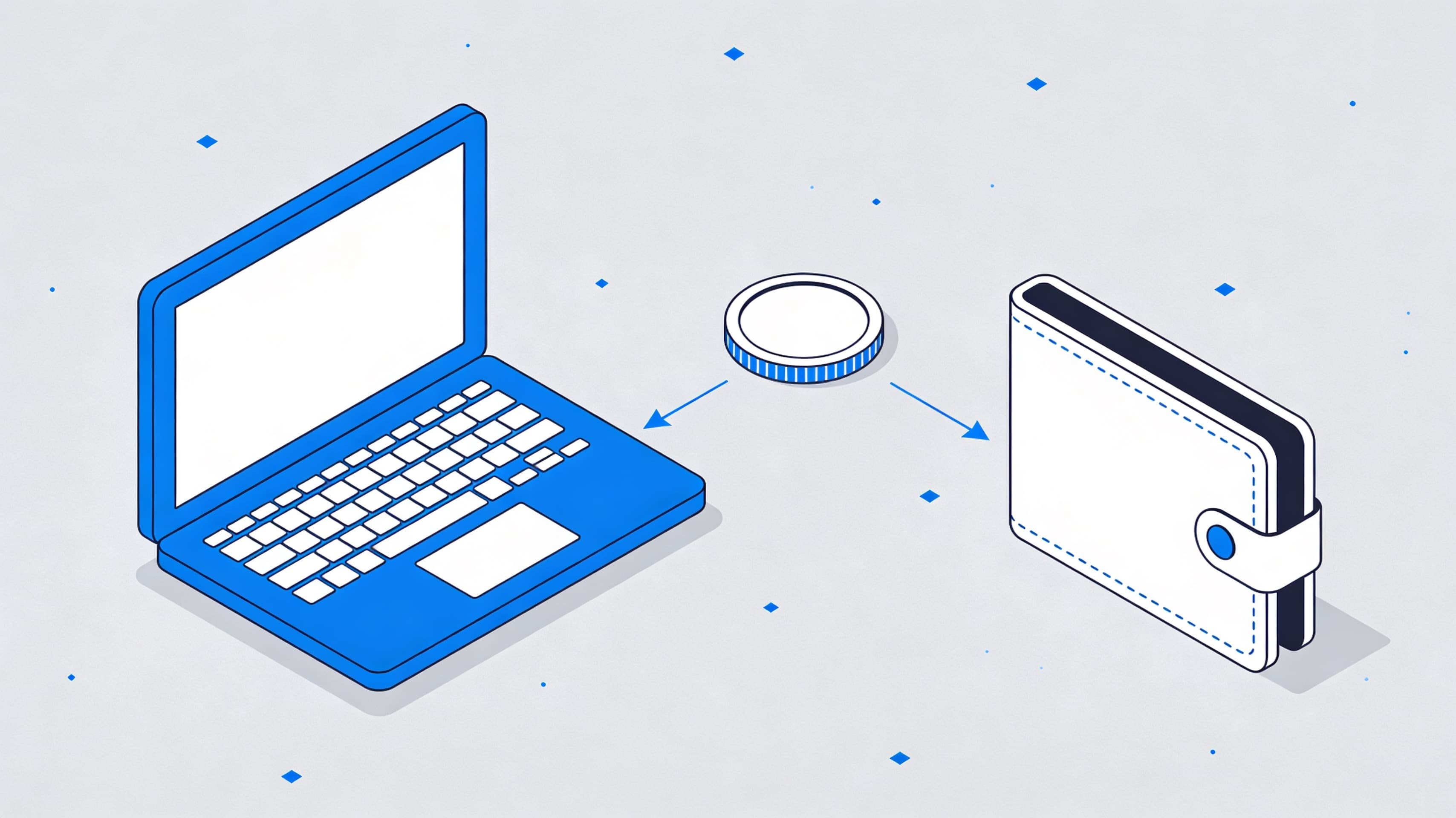
A fiat-to-crypto payment gatewayis a checkout layer that lets buyers pay with a Visa card, Apple Pay, or Google Pay — and delivers USDC (or another stablecoin) to the merchant's wallet instead of wiring dollars through a traditional acquiring bank. The buyer never touches a crypto wallet. The merchant never touches a traditional merchant account. The card network never sees a restricted-category merchant descriptor. For restricted-vertical shops — peptides, nutra, SARMs, kratom, CBD, adult, supplements — this is the payment architecture that makes "accepting cards" possible when Stripe, PayPal, and every acquiring bank in the country has already said no.
What is a fiat-to-crypto payment gateway?
A conventional payment gateway routes a card swipe through an acquiring bank that settles in fiat — US dollars, euros, pounds. A fiat-to-crypto payment gateway routes the same card swipe through a crypto on-ramp provider(Moonpay, Transak, Banxa, Ramp Network) that converts the fiat into a stablecoin and pushes it on-chain to the merchant's wallet in one atomic transaction.
From the buyer's perspective, the experience is identical: enter card number, tap Apple Pay, or use Google Pay. From the card network's perspective, the transaction is classified under MCC 6051 ("quasi-cash / crypto on-ramp") — not under the restricted MCC 5122 that gets peptide shops auto-banned. From the merchant's perspective, USDC lands directly in a Polygon wallet they own, typically within 30–90 seconds of payment clearing, with no custodial intermediary ever holding the funds.
How the fiat→USDC conversion actually works
The flow has four actors: the buyer, the on-ramp provider, the on-chain splitter contract, and the merchant's wallet. Here is the full sequence for a typical checkout:
- Buyer submits card details on the hosted checkout page (e.g.
pay.qistdigital.com/session/cs_…). The payment form is served by the on-ramp provider — not by the merchant — so the merchant never touches card data and PCI scope is zero. - On-ramp acquires the fiat transaction. The acquiring bank sees a crypto-purchase descriptor (MCC 6051) from a regulated on-ramp (Moonpay has EMI licences in 50+ countries, Transak has MSB registration in the US). The issuing bank approves it like any currency exchange transaction.
- USDC is minted or transferred on Polygon (or BNB Chain, Base, depending on the on-ramp). The on-ramp pushes the net USDC amount (gross amount minus on-ramp fee of ~4.5%) to an on-chain splitter contract.
- Splitter forwards funds to the merchant wallet. In Qist's architecture, a PayGate splitter on Polygon routes ~98% of the USDC directly to the merchant's Polygon address and 2% to a treasury address. Total end-to-end: under 90 seconds from card swipe to on-chain confirmation.
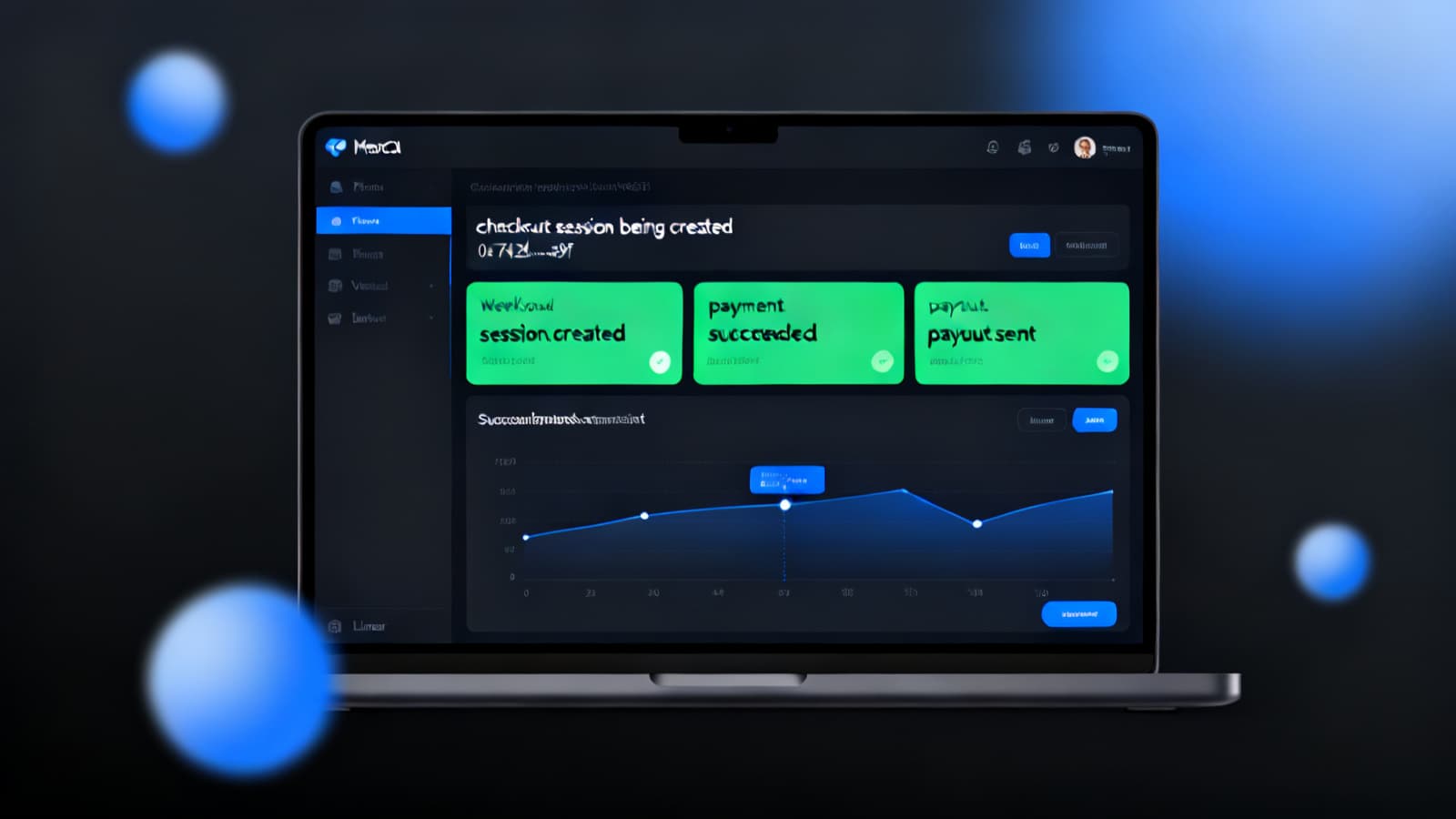
- IPN + webhook. The payment processor receives an Instant Payment Notification from the on-chain layer, verifies the on-chain confirmation, and fires a signed HMAC webhook to the merchant's backend — flipping the order to "paid" automatically.
Why restricted-vertical merchants specifically need a fiat-to-crypto gateway
Traditional card processing requires an acquiring bank to underwrite the merchant's business category. Acquiring banks have hard-blocked merchant category codes — MCC 5122 (drugs and druggists' sundries), MCC 5912 (pharmacies), MCC 8099 (health and allied services) — that trigger automatic rejection or account closure. Stripe, PayPal, and Square all use automated descriptor scanning to enforce this at signup and during processing.
A fiat-to-crypto payment gatewaysidesteps this entirely. The on-ramp provider (Moonpay) is the actual merchant of record for the card transaction. Moonpay's descriptor reads as a crypto exchange purchase (MCC 6051) — a category that Visa and Mastercard permit globally under their money-service-business rules. The underlying goods or services purchased with the resulting USDC are invisible to the card network.
Fiat-to-crypto gateway vs the alternatives
There are four main architectures for accepting payments in restricted verticals. Here's how they compare across the metrics that matter for a solo founder or small team:
| Architecture | Buyer pays with | Merchant receives | Requires LLC? | Onboarding | Fee | Chargeback risk |
|---|---|---|---|---|---|---|
| Traditional Stripe / PayPal | Card / PayPal | USD (bank) | Yes | 2–7 days | 2.9% + 30¢ | Merchant bears it — account freeze risk |
| High-risk PSP (CCBill / AllayPay) | Card | USD (bank) | Yes | 2–4 weeks | 8–10% | Rolling reserve $5k–$50k |
| Crypto-only (NowPayments) | Crypto wallet only | BTC / ETH / USDC | No | < 1 hour | 0.5–1% | No chargebacks — but 85–90% of buyers decline |
| Fiat-to-crypto gateway (Qist) | Card / Apple Pay / Google Pay / USDC | USDC (wallet) | No | Same day | 3% flat | Transferred to on-ramp provider |
The "crypto-only" row deserves a note: NowPayments, CoinGate, and BitPay only convert customers who already own crypto and are willing to send from a wallet. Studies across multiple e-commerce verticals show that 85–92% of buyers abandon crypto-only checkouts. A fiat-to-crypto gatewayis the model that preserves "card accepted here" UX while routing the settlement through the crypto on-ramp layer. It is not the same product as a native-crypto payment processor.
On-ramp providers under the hood: Moonpay, Transak, Banxa
Most fiat-to-crypto gateways aggregate multiple on-ramp providers to maximize card approval rates across geographies. The three dominant on-ramps in 2026 for e-commerce use cases are:
- Moonpay — largest coverage, EMI-licenced in EU/UK, licensed as VASP in multiple US states, integrates Apple Pay and Google Pay natively. Used by Uniswap, MetaMask, and most DeFi front-ends as the default card on-ramp. CPC ~4.5% on card purchases.
- Transak— strong in Asia-Pacific and India; covers local payment methods (UPI, etc.) that Moonpay doesn't. Good fallback for SEA and LATAM traffic.
- Banxa — strong in Australia and Canada; bank transfer (SEPA, Interac) available in addition to card, which can reduce fees to under 1% for EU buyers willing to use bank transfer.
Qist routes by default through Moonpay for card/Apple Pay/Google Pay and offers USDC direct (no on-ramp) for buyers who already hold crypto — at 1.5% instead of the 3% all-in fee for card purchases.
Integration: from zero to live in under 10 minutes
Qist's fiat-to-crypto checkout is a single API call. Pass the order amount, the settlement wallet, and the success/cancel URLs. The API returns a hosted checkout URL — the buyer lands there, picks their payment method, and the USDC arrives in your wallet automatically. The SDK is shaped like Stripe's checkout.sessions.createso existing LLM-generated Stripe scaffolding needs minimal edits:
One-time setup: get an API key
No LLC required. Navigate to /start, paste a Polygon USDC wallet address, and you receive a sk_live_… API key in seconds. The full API reference is available without login.
Frequently asked questions
Does the buyer need a crypto wallet to use a fiat-to-crypto gateway?
No. The buyer only sees a standard card checkout. The crypto conversion happens entirely on the backend between the on-ramp provider and the merchant wallet. Buyers pay with Visa, Mastercard, Apple Pay, Google Pay, or SEPA — exactly as on any other e-commerce site.
What happens if a buyer does a chargeback on a fiat-to-crypto payment?
The chargeback is filed against the on-ramp provider (Moonpay), not against the merchant. Moonpay is the merchant of record for the card transaction. The merchant's wallet has already received USDC and the on-chain transaction is final and irreversible — a chargeback on the card side does not claw back funds from the merchant's wallet. Moonpay absorbs chargeback risk as a cost of their licensing and underwriting model. This is the most important structural difference from a traditional merchant account.
Is a fiat-to-crypto gateway legal in the EU / France / UK?
On-ramp providers operating in Europe (Moonpay, Transak) hold EMI licences under MiCA and the E-Money Directive. The card transaction processed by the on-ramp is a licensed payment service. The merchant receiving USDC in their wallet is receiving a digital asset — currently not subject to payments licensing in most EU jurisdictions for commercial sales. Merchants should verify local tax treatment of stablecoin receipts with their accountant; for most jurisdictions the USDC receipt is treated as foreign-currency revenue at the prevailing EUR/USD rate.
What is the settlement time compared to Stripe?
Stripe settles in 2–7 business days. A fiat-to-crypto gateway using Polygon USDC settles in 30–90 seconds — the time for on-chain confirmation. The merchant's wallet balance reflects payment instantly and is spendable immediately (swappable to EUR via Uniswap, transferable to an exchange for off-ramping, or used directly for USDC-denominated supplier payments).
Developer questions, straight answers.
Does the buyer need a crypto wallet to use a fiat-to-crypto gateway?
What happens to chargebacks on fiat-to-crypto payments?
Is a fiat-to-crypto gateway legal in Europe?
How fast does a fiat-to-crypto gateway settle vs Stripe?
Related guides

Paiements stablecoin : le guide checkout USDC-sur-Polygon (2026)
USDC sur Polygon : finalité sub-2 secondes, gas en centimes, indexé sur le dollar. Les acheteurs tapent sur Apple Pay, les marchands reçoivent l'USDC dans leur propre wallet en 60 secondes.
Accepter des paiements crypto sur son site (non-custodial, sans LLC, 2026)
Checkout crypto non-custodial : carte + Apple Pay + USDC dans un seul flux, settlement direct dans un wallet que vous contrôlez. Sans LLC, sans risque d'off-boarding.
Gateway de paiement high-risk pour peptides : guide 2026
PSP high-risk traditionnel (8–10 %, LLC, 5k–50k $ de reserve) vs. l'on-ramp crypto de PeptidePay (3 % flat, zéro LLC, jour même). Comparaison complète.
Ready to integrate PeptidePay?
Paste your Polygon wallet, drop in the SDK, done. No LLC required, no rolling reserve, same-day go-live — 3% flat.