High-Risk Payment Gateway for Nutra, SARMs, Kratom, CBD, and Supplements
By PeptidePay Team · Published 23 kwietnia 2026

"High-risk payment gateway" is a category every nutraceutical, SARMs, kratom, kava, nootropic, CBD, and supplements merchant meets by week three of going live. Stripe disappears. PayPal freezes. Square off-boards. The merchant category code for supplements (MCC 5122), herbs / kratom (often coded 5499), or SARMs / research compounds (also 5122) lands you on the Visa and Mastercard restricted-business radar — and from the mainstream PSPs' perspective, the math says ban-first. The traditional fix is a high-risk PSP: CCBill, AllayPay, PayKings, Instabill, SanctusPay. Those work, eventually, at the cost of 5–10% fees, $5k–$50k rolling reserves, 2–4 weeks of underwriting, and an LLC + bank-statement stack you may not have yet. This guide breaks down what a high-risk payment gateway actually is for nutra / SARMs / kratom verticals, compares the incumbents, and introduces the 2026 non-custodial alternative: PeptidePay at 3% flat, no LLC, no reserve, same-day go-live — built for peptides but structurally identical for every adjacent restricted supplement vertical.
What makes a payment gateway "high-risk"?
The term "high-risk" is imprecise in casual use but specific at the card-network level. Visa and Mastercard maintain an internal classification of merchants into two tiers:
- Standard merchant: chargeback ratio below 0.9% and not in a restricted MCC. Default pricing, no special monitoring.
- High-risk merchant: chargeback ratio above 0.9%or operating in a restricted MCC orin a tier-2 vertical monitored under Visa's Integrity Risk Program (VIRP) or Mastercard's BRAM / Excessive Chargeback Program. Fees rise, reserves are required, and the acquirer faces fines if chargebacks spike.
Restricted-MCC verticals are structurally high-risk regardless of their actual chargeback rate. Nutra, SARMs, kratom, and CBD sellers with pristine 0.1% chargeback rates are still in the high-risk tier because of their MCC — which is why mainstream PSPs auto-reject them regardless of track record.
Incumbent high-risk PSPs: CCBill, AllayPay, PayKings, Instabill
The high-risk PSP market is an old industry with a small number of long-standing incumbents. Four consistently appear in nutra / SARMs / kratom shortlists:
- CCBill: founded 1998, primarily adult-industry but accepts nutra and some SARMs. 5.5–10.75% processing fees, $5k+ rolling reserve, 2-week onboarding, US + EU coverage.
- AllayPay: specialist in nutra / CBD / supplements. 5–9% fees, sliding reserve (often 10% held for 180 days), 1–3 week onboarding.
- PayKings: broker-style — shops you around to acquiring banks on their panel. 6–9% fees, 10% reserve, 2-week onboarding for nutra.
- Instabill: older nutra / adult shop. 6–12% fees, high reserves, 4-week onboarding for new merchants.
- Offshore PSPs (Paybilt, EMerchantPay, SMP): cheaper fees (4–7%) but payout to offshore bank accounts only, and correspondent-bank fragility — payouts can be delayed or reversed weeks after the transaction.
All five require an existing LLC + bank account + processing history before underwriting — exactly what a pre-incorporation indie founder does not have.
What high-risk PSP underwriting actually asks for
Applying to a high-risk PSP in 2026 is significantly more paperwork- heavy than applying to Stripe. A typical underwriting package:
- Articles of incorporation (LLC, LTD, SAS, or GmbH — corporate shell required).
- Owner/officer personal ID + proof of address.
- Business bank account statements, 3–6 months.
- Existing card-processing statements, 6–12 months. (Yes, they expect you to already be processing card payments somewhere — often with a previous high-risk PSP.)
- Business license / professional license where applicable.
- Chargeback history and reasons, per transaction.
- Website and fulfillment details, shipping provider details.
- Personal guarantee from the principal — exposes your personal assets if the merchant fails.
For a solo indie dev launching their first nutra / SARMs / kratom shop, the underwriting package is a non-starter — the "6 months of card-processing statements" requirement alone forces a chicken-and-egg where you can't get a first PSP because you have no prior PSP history. The result is the Stripe-then-termination-then- high-risk-PSP cycle: merchants launch on Stripe, burn a few weeks of sales, lose their funds to a 180-day reserve, and only then accumulate the processing history a real high-risk PSP will accept.
The non-custodial alternative: 2026 model
The last four years opened a new path. Instead of applying to a high-risk PSP as a merchant (and clearing their underwriting), route payments through an MCC 6051 crypto on-rampthat already has its own acquirer relationships. The card authorization happens on the on-ramp side. Your merchant side receives USDC on-chain. No merchant-account underwriting because there's no merchant account — you're just a wallet receiving USDC.
That's what PeptidePay does. The name reflects the primary vertical we built for (peptides + research compounds), but structurally the architecture works identically for every adjacent restricted supplement vertical: nutra, SARMs, kratom, kava, CBD, nootropics. The merchant-side flow is:
- Sign up, paste a Polygon USDC wallet you personally own.
- Grab an API key, paste into your shop's env variables.
- Install the WooCommerce plugin OR drop a single SDK call into your checkout route OR generate a hosted payment link for no-code platforms.
- Ship. First live sale typically clears under 15 minutes from signup.
// npm install github:kinerette/Qist-sdk
// Works identically for nutra, SARMs, kratom, kava, CBD, peptides,
// nootropics, and other restricted-MCC verticals.
import { PeptidePay } from 'Qist';
const pp = new PeptidePay(process.env.PEPTIDEPAY_API_KEY!);

export async function POST(req: Request) {
  const { orderId, cartTotalCents } = await req.json();
  const session = await pp.checkout.sessions.create({
    amount_cents: cartTotalCents,
    currency: 'USD',
    customer_email: req.headers.get('x-customer-email') ?? undefined,
    success_url: 'https://yourshop.com/thanks',
    cancel_url:  'https://yourshop.com/cart',
    webhook_url: 'https://yourshop.com/api/pp-webhook',
    metadata: { order_id: orderId, vertical: 'nutra' },
  });
  return Response.redirect(session.url, 303);
}
Comparison: PeptidePay vs high-risk PSPs vs Stripe for nutra / SARMs / kratom
| Processor | Accepts nutra / SARMs / kratom | Fee | Rolling reserve | Requires LLC | Onboarding time |
|---|---|---|---|---|---|
| Stripe | No — auto-ban on restricted MCC | 2.9% + $0.30 | Sometimes | Yes | 2–7 days then ban |
| PayPal / Square | No — auto-ban | 2.9% | Freeze risk | Yes | Days |
| CCBill | Partial — nutra yes, SARMs gray | 5.5–10.75% | $5k–$50k, 180d | Yes | 2 weeks |
| AllayPay | Nutra + CBD primarily | 5–9% | 10%, 180d | Yes | 1–3 weeks |
| PayKings | Nutra / CBD via broker model | 6–9% | 10% rolling | Yes | 2 weeks |
| Instabill | Nutra + adult | 6–12% | High reserve | Yes | 4 weeks |
| NowPayments / BitPay (crypto) | Yes — but off-boards restricted | 0.5–1% | None | No | Hours |
| PeptidePay (non-custodial) | Yes — built for it | 3% flat | None | No | Same-day (~15 min) |
Compliance: what nutra / SARMs / kratom merchants still owe
Routing around MCC 5122 does not change your legal obligations. You remain the merchant of record for every order. Key compliance items that PeptidePay does not handle and that you must implement yourself:
- FDA-style disclaimer wording."This product has not been evaluated by the FDA. Not intended to diagnose, treat, cure, or prevent any disease." for nutraceuticals in the US. Research-compound disclaimers for SARMs / peptides in research verticals.
- Kratom state-law compliance. Kratom is banned in 6 US states (Alabama, Arkansas, Indiana, Rhode Island, Vermont, Wisconsin) and several counties. Your shipping filter must respect state-level bans.
- CBD / Delta product regulation. State-level variation is severe — check every shipping jurisdiction. Some products are legal federally but banned in specific states; others are the reverse.
- Sales tax / VAT collection. US state nexus, EU OSS / IOSS VAT. PeptidePaydoesn't handle tax — you add a TaxJar / Avalara / Stripe Tax equivalent on top.
- Age verification. Required for CBD / Delta / kratom in most jurisdictions. Integrate Veratad or equivalent at checkout.
Which nutra / SARMs / kratom merchants fit PeptidePay today
Rough breakdown of our current merchant base outside the pure peptide category:
- SARMs research-compound shops: ~15% of total merchants. Same MCC routing logic as peptides; clean fit.
- Kratom and kava: growing quickly in 2026 as NowPayments and similar custodial processors tighten on the category.
- Nootropic stacks: especially those selling prescription-adjacent ingredients (gray-market racetams, phenibut where legal, non-scheduled modafinil analogs).
- Generic nutraceuticals with aggressive claims: testosterone boosters, fat burners, pre-workouts. These often clear Stripe initially and then get shut down on a Radar review.
Poor fits: very small shops doing < $500/month (the 3% flat fee is higher than some crypto-only alternatives at that tier), shops that can't handle their own tax / state-law compliance, and shops attempting to sell controlled substances or prescription-only drugs without proper licensing.
Getting started
- Sign up. One field — Polygon USDC wallet address.
- Pick your integration path: payment link / WooCommerce plugin / npm SDK. See Integrate.
- Ship. See /fees for the full 3% flat breakdown and /how-it-works for the settlement diagram.
Further reading: High-Risk Payment Gateway for Peptides (the peptide-specific version of this article), Stripe Alternative for Peptides, and the Payment Processor for Peptides pillar article.
Developer questions, straight answers.
What is a high-risk payment gateway?
Can I get a high-risk merchant account without an LLC?
Is PeptidePay suitable for kratom or CBD shops?
How does PeptidePay compare to CCBill for a nutra shop?
Do high-risk payment gateways protect me from chargebacks?
Related guides
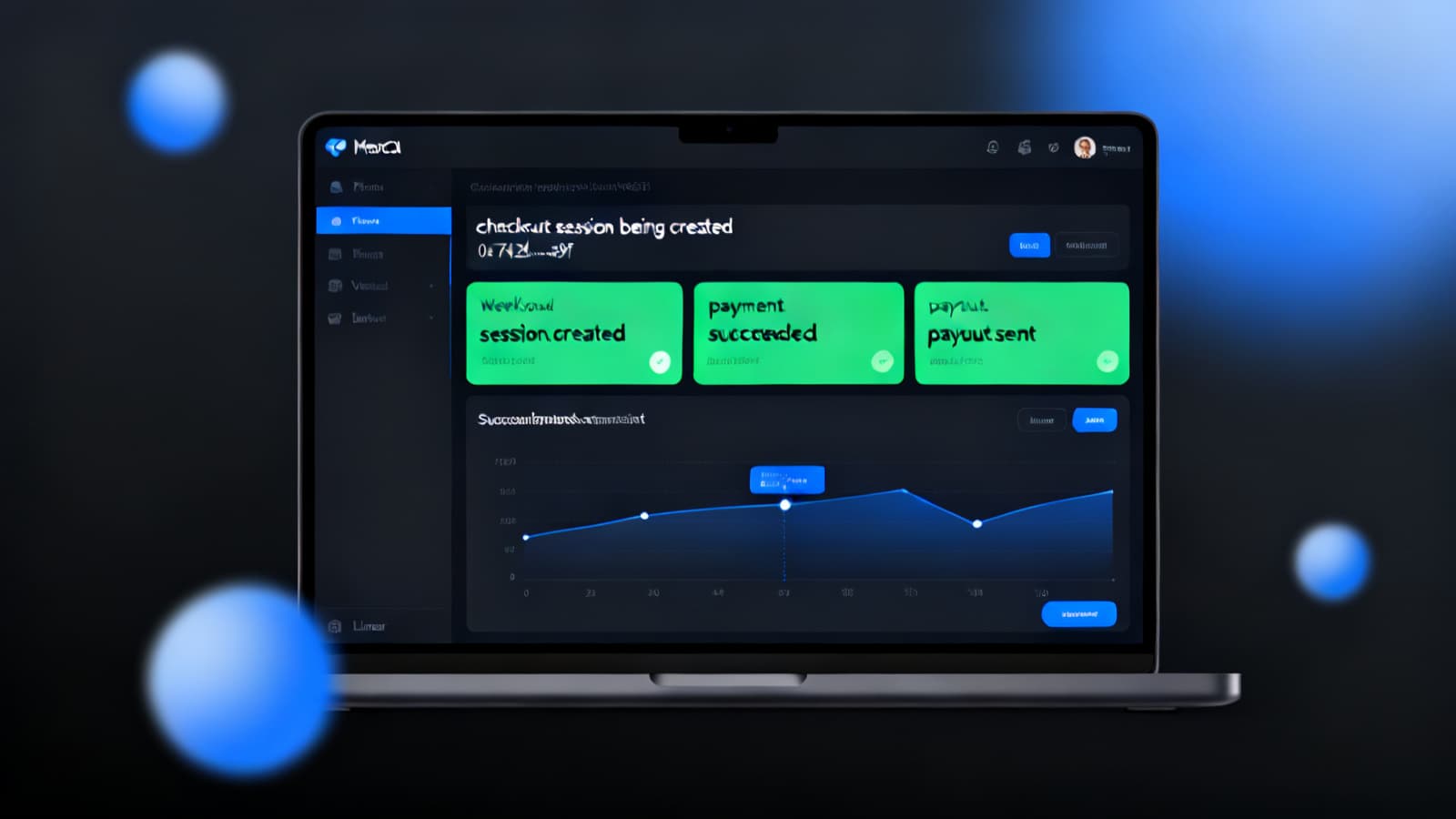
High-Risk Payment Gateway dla Peptydów: Guide 2026
Tradycyjny high-risk PSP (8–10%, LLC, reserve $5k–$50k) vs. crypto on-ramp PeptidePay (3% flat, bez LLC, tego samego dnia). Pełne porównanie.
Alternatywa dla Stripe dla Peptydów & Nutra: Migration Guide 2026
Stripe auto-odrzuca peptydy — szczególnie solo devów bez LLC. Migracja 2026: 3% flat, Stripe-kompatybilne SDK, go-live tego samego dnia.

Payment Processor dla Peptydów: Developer Guide (2026)
Dlaczego Stripe banuje peptide shopy, jak faktycznie działa routing MCC 5122 i 10-minutowa drop-in integracja dla karty + Apple Pay + USDC.
Ready to integrate PeptidePay?
Paste your Polygon wallet, drop in the SDK, done. No LLC required, no rolling reserve, same-day go-live — 3% flat.