High-Risk Payment Gateway for Peptides: the 2026 Developer Guide
By PeptidePay Team · Published April 22, 2026
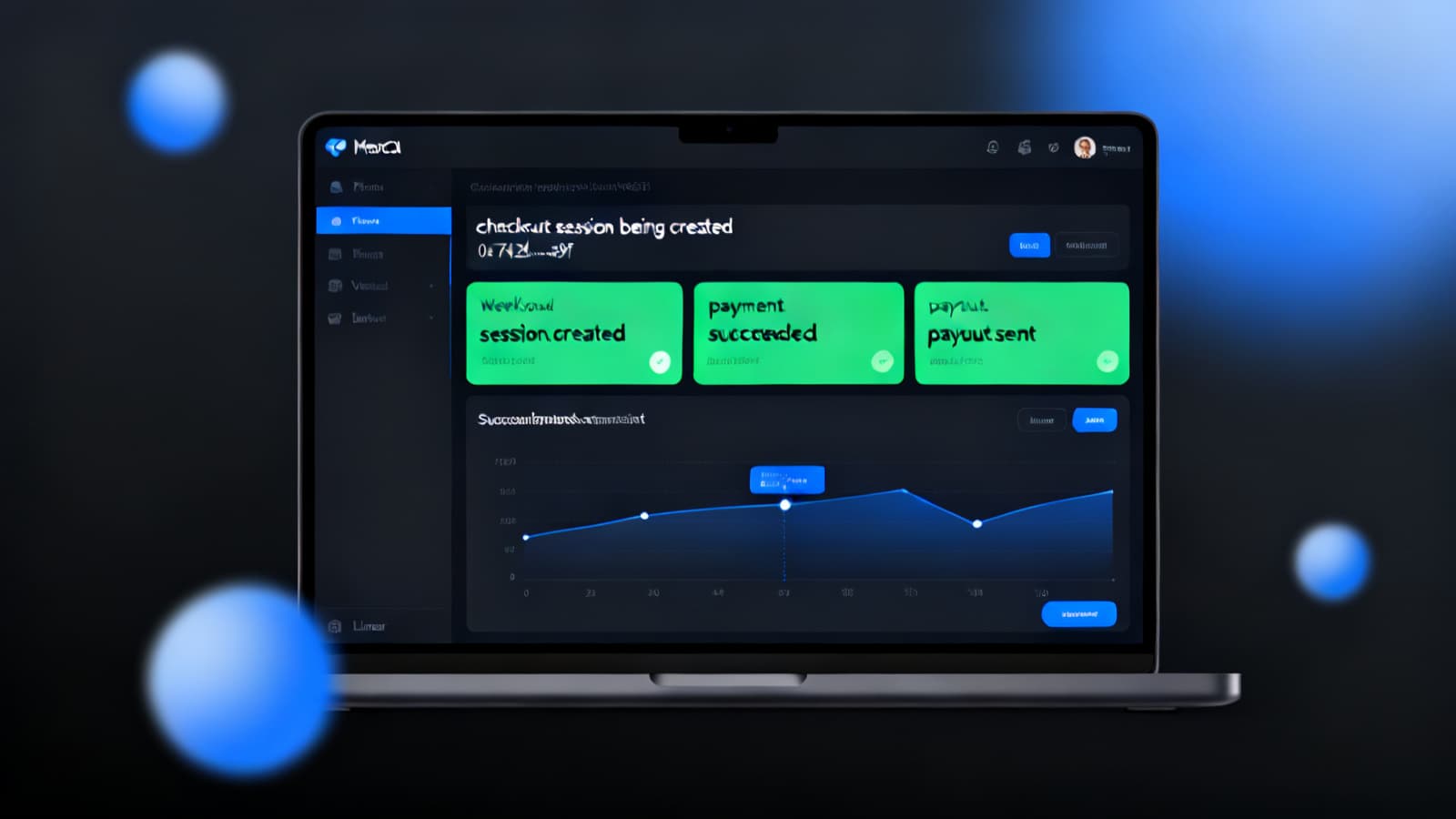
A high-risk payment gateway for peptides is a processor that accepts merchant categories Visa and Mastercard classify as elevated-risk — MCC 5122, MCC 5912, MCC 8999 — without closing the account on the first transaction. In 2026, the two working models have very different target users. A traditional high-risk PSP (CCBill, AllayPay, Instabill, PayKings) runs ~5–10% with 2–4 weeks of underwriting, an LLC + 6–12 months of processing history, and a $5k–$50k rolling reserve — designed for established merchants. The non-custodial crypto on-ramp model like PeptidePay runs 3% flat with same-day go-live, no registered company required to start, and no reserve — designed for solo founders and indie devs shipping their first peptide shop. This article explains when to pick which, with real numbers.
What makes a payment gateway "high-risk" in the card networks' eyes
Visa and Mastercard don't actually certify gateways as "high-risk". The label comes from the acquiring bank behind the gateway — whether that bank is willing to sponsor a BIN for merchants in elevated-risk MCCs. Three factors drive the designation:
- Merchant Category Code. MCC 5122 (drug stores), 5912 (pharmacies), 5993 (cigars), 7273 (dating), 5912, 7995 (gambling), and 5967 (adult) are all flagged high-risk by default.
- Historical chargeback rate in the vertical. If peptide merchants in aggregate run 2%+ dispute rate, the vertical itself becomes high-risk, even for clean merchants.
- Regulatory exposure. FDA enforcement actions, DEA scheduling, and state-level AG lawsuits all increase perceived risk and push sponsoring banks to exit the vertical.
The traditional high-risk merchant account model
The "classic" high-risk payment gateway for peptides is a merchant account sponsored by a specialized acquirer — Esquire Bank, Merrick Bank, Fifth Third, or an offshore sponsor like Pacific NDB in Curacao. The broker layer (CCBill, AllayPay, EMB, PayKings, Instabill, Tasker Payment) acts as a middleman between you and the sponsor. The economics assume you're already an established merchant:
| Line item | Typical rate | Notes |
|---|---|---|
| Discount rate (processing) | 4.5% – 7.5% | Negotiated per merchant; depends on processing volume projection. |
| Per-transaction fee | $0.25 – $0.35 | Stacks on discount rate. |
| Chargeback fee | $25 – $45 each | Charged whether you win or lose the dispute. |
| Monthly account fee | $25 – $99 | Plus gateway fee ($25/mo additional is common). |
| Rolling reserve | $5k – $50k (5–15% for 180 days) | Held against chargebacks. Released after 6 months — if no disputes. |
| Setup fee | $0 – $500 | Some brokers charge; most waive to win the account. |
| Onboarding time | 2 – 4 weeks | Requires LLC/incorporation docs, bank statements, 6–12 mo processing history, business license, personal guarantee. |
On a $10,000/month peptide shop the effective fee lands around 8–9% all-in, plus a ~$1,000 rolling reserve held for 180 days. The deeper problem for a first-time founder: you can't get in the door. Every line on the application — LLC, EIN, business bank account, 6+ months of processing history — assumes the merchant already exists. Indie devs, vibe-coders, and solo founders launching their first e-commerce venture fail the checklist before they reach the pricing conversation.
The modern alternative: crypto on-ramp routing
A newer class of "high-risk payment gateway" bypasses the sponsor-bank underwriting layer entirely by routing card transactions as crypto on-ramp purchases (MCC 6051). The flow:
- Customer clicks Pay with card on your peptide store.
- They land on a hosted checkout at https://peptide-pay.com/session/cs_… and pick an on-ramp (Moonpay, Revolut Ramp, Transak, Mercuryo, Banxa, Binance Connect).
- The on-ramp processes the card transaction on its own infrastructure as an MCC 6051 crypto purchase. Visa approves (authorization rate ~87%).
- The on-ramp sends USDC on Polygon to an on-chain splitter smart contract, which forwards 97% to your wallet and 3% to PeptidePay.
- Webhook fires to your shop with
{ status: 'paid', amount_usdc: '181.73' }. Order ships.
From the card network's perspective no peptide transaction ever occurred — only a crypto purchase. That is why PeptidePay charges 3% instead of 8%, why onboarding is one wallet field instead of two-to-four weeks of underwriting, and why a solo founder with no registered company can go live the same day they finish their Next.js / Shopify / WooCommerce build.
// Get an API key in 5 minutes at pay.qistdigital.com
// (no LLC, no merchant bank account, no processing history required)
// npm install github:kinerette/Qist-sdk
import { PeptidePay } from 'Qist';
const pp = new PeptidePay(process.env.PEPTIDEPAY_API_KEY!);

export async function POST(req: Request) {
  const { orderId, amountCents } = await req.json();
  const session = await pp.checkout.sessions.create({
    amount_cents: amountCents,
    currency: 'USD',
    success_url: 'https://peptide-shop.com/thanks',
    cancel_url:  'https://peptide-shop.com/cart',
    webhook_url: 'https://peptide-shop.com/api/pp-webhook',
    metadata: { order_id: orderId },
  });
  return Response.redirect(session.url, 303);
}
Traditional high-risk vs. crypto on-ramp for peptides
| Dimension | High-risk PSP (CCBill / AllayPay) | PeptidePay (crypto on-ramp) |
|---|---|---|
| Accepts peptides | Yes — if broker approves | Yes — by design |
| Requires LLC? | Yes — incorporation docs required | No — wallet address only |
| Requires rolling reserve? | Yes — $5k–$50k for 180 days | No |
| Minimum history required | 6–12 mo processing history | None |
| Onboarding time | 2–4 weeks | Same-day go-live |
| Effective fee (all-in) | 8–10% | 3% flat |
| Chargeback risk | All yours | On the on-ramp |
| Settlement currency | USD (T+2) | USDC on Polygon (instant) |
| Descriptor on statement | "YourStore-Peptides" | "USDC PURCHASE · MOONPAY" |
| Can be frozen by processor | Yes | No — non-custodial |
| Maximum volume | Negotiated monthly cap | Unlimited |
| Target user | Established merchant ($100k+/mo) | Solo founder / indie dev at MVP |
When a traditional high-risk merchant account still makes sense
Three cases where the classic broker route beats the crypto on-ramp approach:
- You're already incorporated, processing $100k+/month, and want USD settlement. At that scale the discount rate becomes negotiable (3.5–4.5%), you have the LLC and bank statements the broker requires, and settling in USD directly to a US bank simplifies tax reporting vs. converting USDC to USD at an exchange.
- You need to accept American Express as a direct acquirer. Some high-risk merchant accounts carry direct Amex contracts.PeptidePay's on-ramps cover Amex via the card networks but not as a direct acquirer relationship.
- You explicitly want MCC 5122 on your statement descriptor. Rare, but some B2B peptide suppliers prefer to be coded as a pharmacy for wholesale customers who need MCC 5122 receipts.
For everyone else — solo founders, indie devs, DTC merchants doing $5k–$50k/mo, and anyone who needs to launch before forming a company — the crypto on-ramp model wins on speed, fees, go-live time, and freeze-proof settlement.
High-risk payment gateways to avoid in 2026
Specific brokers to be careful with, from merchant feedback over the last 18 months:
- Any "offshore" broker with an unspecified sponsor bank.If the broker won't name the acquirer (Esquire, Merrick, Pacific NDB), the account is sitting on an aggregator MID and can be closed without notice.
- Brokers that require a $2,000–$5,000 setup fee. Setup fees at this level correlate with high early-termination rates; the broker collects the fee and the bank closes the account within 90 days.
- Gateways that promise "Stripe-like approval" for MCC 5122.Stripe-like approval on MCC 5122 doesn't exist. If someone promises it, they're either misclassifying your MCC (fraud — will get caught on chargeback review) or they're lying.
- Any processor that asks for your bank account login credentials. No legitimate underwriter needs your banking password — Plaid / Yodlee integrations are fine, raw credentials are not.
Technical considerations when building on a high-risk gateway
Four implementation details that bite indie developers:
- Idempotency keys.High-risk gateways retry failed authorizations more aggressively than Stripe. Always send an idempotency key on checkout session creation or you'll double-charge customers during network blips. PeptidePay accepts an
Idempotency-Keyheader onPOST /api/v1/checkout/init. - Webhook retries. The settlement webhook must be idempotent on your end too. PeptidePay retries webhooks 5× over 15 hours with exponential backoff. Use the
X-PeptidePay-SignatureHMAC to deduplicate. - 3DS / SCA.EU customers must go through 3DS. Our on-ramps handle 3DS at their layer — you don't configure it. For EEA traffic, authorization rates on 3DS average 91% vs. 76% on direct MCC 5122 gateways.
- Fraud scoring. On-ramp providers run their own fraud engines (Chainalysis, Sift, Sardine). You inherit their fraud-scoring for free — no Radar configuration, no custom rules.
Getting started with PeptidePay as a high-risk gateway
- Sign up at https://peptide-pay.com/signup — email + Polygon wallet only. No LLC, no bank statements, no processing history.
- Install:
npm install github:kinerette/Qist-sdkor download the WooCommerce plugin. - Wire the webhook endpoint.
- Run a $1 test end-to-end, then point production traffic at the gateway.
Further reading on the architecture: MCC 5122 routing explained, Stripe alternative for peptides, and the full payment processor for peptides guide.
Developer questions, straight answers.
What is a high-risk payment gateway?
Do I need a registered company to use a high-risk payment gateway?
Does a high-risk payment gateway require a rolling reserve?
What does a high-risk payment gateway charge a peptide merchant?
How fast can I go live with PeptidePay vs a high-risk PSP?
Can I integrate a high-risk gateway as easily as Stripe?
What MCC does PeptidePay route peptide transactions under?
Will my peptide store get frozen on a high-risk gateway?
Related guides

Payment Processor for Peptides: the Developer Guide (2026)
Why Stripe bans peptide shops, how MCC 5122 routing actually works, and the 10-minute drop-in integration for card + Apple Pay + USDC.

Stripe Alternative for Peptides & Nutra: 2026 Migration Guide
Stripe rejects peptides automatically — especially solo devs with no LLC. The 2026 migration: 3% flat, Stripe-compatible SDK, same-day go-live.
MCC 5122 Payment Processor: the 2026 Routing Guide for Peptide Shops
MCC 5122 gets peptide shops banned from every mainstream PSP. The 2026 alternative: route cards through MCC 6051 crypto on-ramp at 3% flat.
Ready to integrate PeptidePay?
Paste your Polygon wallet, drop in the SDK, done. No LLC required, no rolling reserve, same-day go-live — 3% flat.